
Broadcasting a 27-hour Guinness World Record: the run sheet, the failures, and the footage that counted
On 23 July 2022 a team in Vadodara chanted for 27 hours, 27 minutes and 27 seconds and set a world record. My job was to make sure the world could watch it, and that Guinness could verify it. Here is how that night actually went.
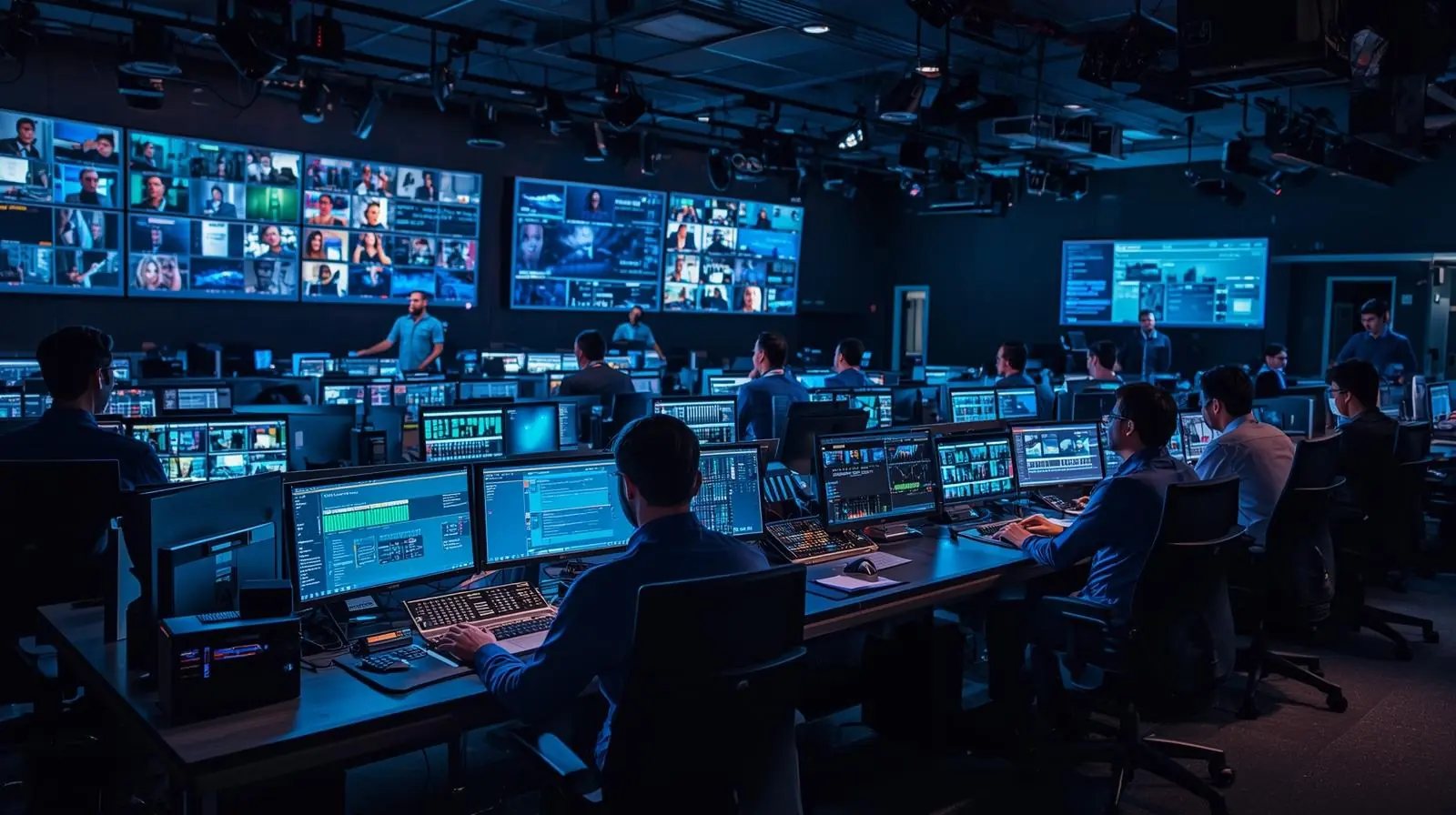
A world record attempt has two audiences. There are the people watching, who want to feel the thing as it happens. And there is Guinness, who want continuous, timestamped, unbroken evidence that it happened at all. The first audience forgives a dropped frame. The second one doesn't. For 27 hours, 27 minutes and 27 seconds, my job was to satisfy both, and I had been preparing for it for about five years without knowing it.
I have run the technical production at the Swaminarayan temple in Kundaldham and Karelibaug since 2017. Daily broadcasts, festivals, multi-camera events. By 2022 the routine was deep enough that a normal evening could run itself. This was not a normal evening. This is the honest account of it, written from my notes and the run sheet, because I've never seen anyone describe what a record broadcast is actually like from the desk.
The brief, and the rule underneath it
Guinness's evidence requirements for a marathon record are specific: continuous video of the entire attempt, a visible clock, independent witnesses, and log sheets signed at intervals. Continuous is the word that decides everything. A single gap, even a few seconds while a card is swapped, can void the attempt. So the design rule became: at every moment, two independent devices must be recording, and neither of them may be the one you're currently touching.
That rule shaped the whole setup. Everything was in pairs. Every action on one path was done while the other path was untouched, and the log recorded the timestamp of every touch.
The setup
- Four cameras on the stage: two wide locked-off shots for evidence, two operated for the broadcast.
- Two recorders on independent power, each capturing the programme feed plus one locked wide camera, with staggered card swaps so no two swaps ever overlapped.
- A visible running clock in shot on both evidence cameras, synced to the official timekeeper's clock at the start.
- Backup generator tested twice that week, with the switch-over rehearsed.
- A second, cheaper internet uplink, because the primary one would fail. It did, at 3:40 in the morning, for eleven minutes.
- A run sheet with a name and a phone number against every hour of the night.
None of that is exotic equipment. What made it work was the discipline around it. Every card swap was announced, logged and performed on the path that wasn't primary. Every operator handover had a two-minute overlap. Every hour someone walked the cable runs with a torch.
The night
The first six hours are the easy ones. Everyone is fresh, the crowd is large, the stream numbers climb. The danger in the first six hours is over-confidence: you start to think the system is running itself and you loosen the logging. I didn't let it loosen. Every swap, every handover, every uplink hiccup went into the sheet with a time.
Hours ten to eighteen are where records get lost. It's 2 a.m., the hall is quieter, the operators who started at 9 p.m. are now on their second wind or past it. At 3:40 the primary uplink dropped. The stream failed over to the backup within about twenty seconds. The recordings didn't notice, because the recordings never depended on the internet. That separation, evidence on one side and audience on the other, is the single most important decision in the whole design. If I'd tied them together to save one box, the record would have had an eleven-minute hole.
The stream is for the people. The recording is for the record. Never let one depend on the other.
At hour twenty-one one of the locked evidence cameras began to overheat. The image was fine but the temperature warning was on. The rule held: the other evidence camera and both recorders were untouched while a third camera was brought up, framed to match, and swapped in with the overlap logged. Total exposure of that path: zero seconds, because the second path never blinked.
27:27:27
The last hour is the strangest. The hall fills again. The chanting, which has been steady for a day, gets louder. Everyone on the desk knows that this is the hour where a mistake is unforgivable, and everyone gets very calm. At 27 hours, 27 minutes and 27 seconds the timekeeper called it, the hall erupted, and I did not look up for about four minutes, because the recordings had to run past the end with the clock in frame, the log had to be closed with signatures, and the cards had to be sealed in front of witnesses.
Only then did I watch the footage of the moment. It's the only part of the night I saw as a viewer.
The humans, which is the hard part
Equipment doesn't get tired. Operators do. The roster for the night had fourteen people across camera, sound, desk and runners, most of them volunteers who had a job to go to the next morning. The schedule was built in three-hour blocks with a mandatory hour off between any two blocks for the same person, and I was the one exception, because someone has to hold the whole picture. By hour twenty I was making decisions more slowly and I knew it, so the rule for the last six hours was that any decision touching the evidence path needed a second person to say it back to me before I acted. That sounds like theatre. It caught one mistake.
Food, water and a quiet room matter more than a spare camera. The volunteers who got a real meal at 1 a.m. were sharper at 5 a.m. than the ones who ate biscuits at the desk. I now budget for the kitchen before I budget for the backup recorder.
What the stream did
The live stream ran to the temple's own channels and to devotees across India and abroad. Viewership had two peaks: the start, and the last hour, when word went round that the record was about to fall. Between them it settled into a long, steady plateau of people who left it on in their homes overnight, which is its own kind of audience. The failover at 3:40 a.m. cost about twenty seconds of picture and produced exactly two messages asking if the stream had died. It had not. The backup uplink was a mobile connection I had been told was 'too slow to bother with'. It carried the record for eleven minutes.
The tools the night produced
Almost every live system I now run started as a workaround from that night or the events around it. The casting system, because a phone needed to reach every screen in the building without a cable. The crew talkback, because rented intercom hardware failed twice in rehearsal and cost more than building our own. The show-control helper, because one operator needed to fire hundreds of clips without a second person reading the list. The tally lights, because a camera operator can't watch the desk and the subject at the same time. None of them were products when they were built. They were fixes for a room that could not be allowed to fail.
What I'd tell anyone asked to do this
- Design for the auditor, then for the audience. If the evidence path is right, the broadcast is easy.
- Pairs of everything, and never touch the active one. This costs a second recorder. It saves the record.
- Write the run sheet for the person you'll be at 4 a.m., not the person you are at the planning meeting.
- Rehearse the failures. We had rehearsed the uplink failover. When it happened for real, it was boring, which is the goal.
- Log obsessively. The log is what turns 'I'm sure it was continuous' into a certificate.
The record stands. The certificate is on the front page of this site, and the systems I built for that night, the casting, the crew talkback, the show control, became products of their own. Most of what I know about building things that can't be restarted, I learned in a hall in Vadodara with a torch and a run sheet.
If you run live events and want a broadcast that can survive a night like that, the brief form on the front page reaches me directly.
Product builder from Surat. Ships his own apps, runs live broadcasts, and takes on a few founders a year for product, brand and growth. hey@jaybutani.com